Book a demo
ABOUT

The work North America still does by hand

Assembler AI is a computer vision company. The most valuable manufacturing on this continent still depends on skilled people at workstations. We exist to give those people, and the engineers who support them, something better than guesswork to work from.

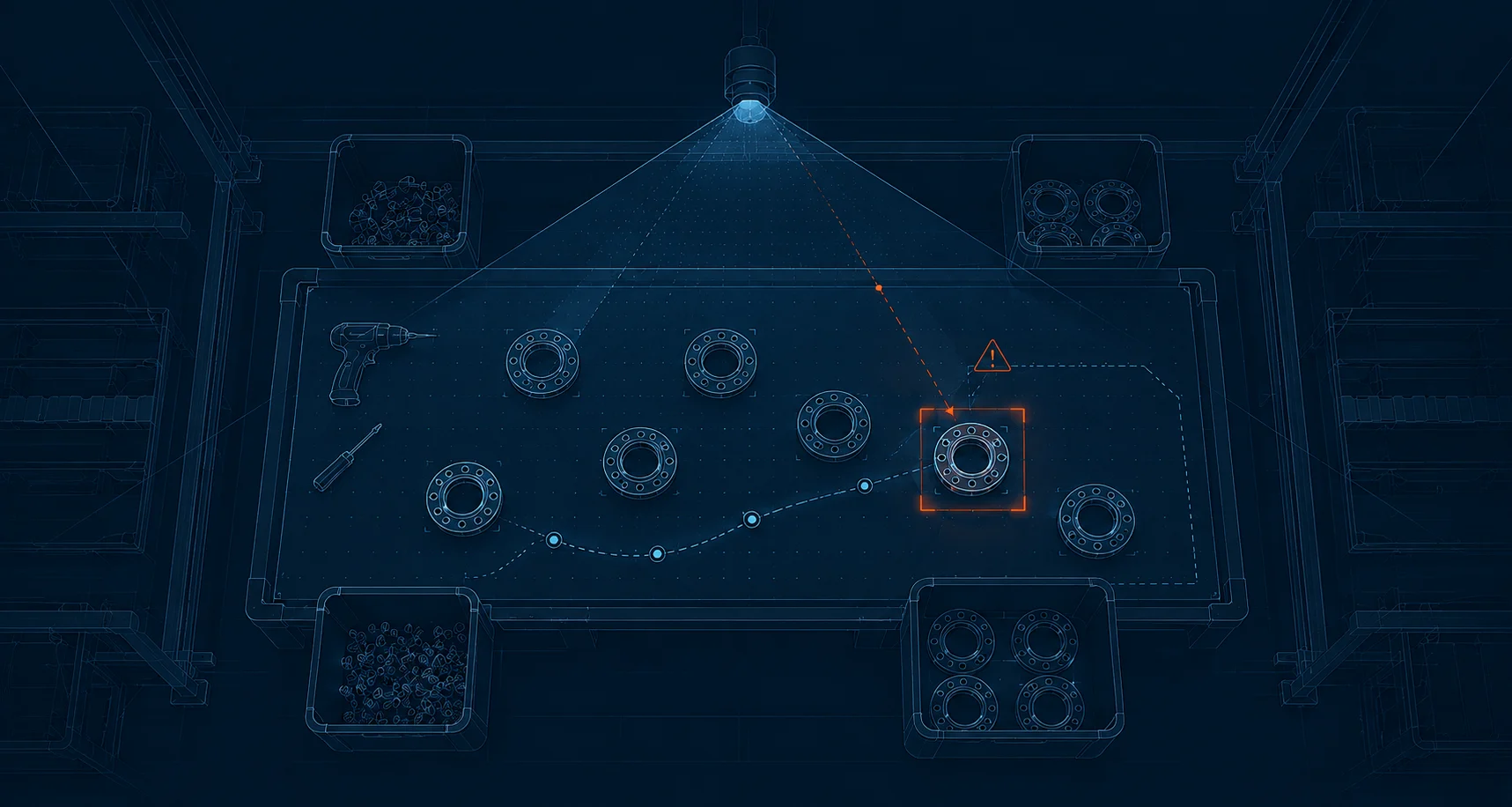
Blueprint of a workstation: a camera above the bench highlights one part of nine on the table
Mission

Built to accelerate North American manufacturing

The highest-value goods on the continent get built by hand: aircraft assemblies, medical devices, vehicle components. That work stays in North America on precision and speed, and both live at the workstation. Every station that runs closer to its standard is an argument for building here. That’s the outcome we’re working toward, and it’s why this company is pointed at high-mix, low-volume manufacturers rather than at the highest-volume lines in the world. There’s a second effect we care about. Scrap carries the embodied carbon of every stage that produced it, so preventing a defect prevents the emissions attached to the material as well as the cost. Doing this well means less waste in both senses.

The team

People who have scaled video AI, and people who have stood on the floor

That’s the combination this needed. Someone who has built and sold video AI before. Someone who spent years inside the plants that need it. And someone whose research is on the exact technical problem in the way.

Brett Beranek

Brett Beranek

Chief Executive Officer

Twenty-five years building and scaling AI companies from nothing, starting his career in computer vision. He scaled Genetec’s video AI business from zero to $50 million at what is now a company worth over a billion. He founded Viion, a facial recognition company, and exited it. He then scaled Nuance’s voice AI division from zero to $100 million in annual recurring revenue, and Nuance was acquired by Microsoft.

Jonayed Islam

Jonayed Islam

Head of Product

A founder who has taken businesses from zero to one. He scaled his video production agency to $1 million and then launched JetScale AI at Diagram Ventures which raised $5.4 million. Before that he spent years as a strategy consultant to manufacturers including GE Aerospace and Stellantis, and to dozens of mid-market plants across North America. The problem Operator Vision solves is one he watched go unsolved on floor after floor.

Artem Pilzak

Artem Pilzak

Head of AI

A published PhD whose research is on computer vision generalization, which is precisely the problem that makes this product possible. He has run end-to-end computer vision deployments in manufacturing for a global steelmaker and for several of the world’s largest glass manufacturers. He has also deployed at Fortune 500 scale in retail.

Stephan Lefrancois

Stephan Lefrancois

Head of Engineering

Stephan has spent over two decades building and scaling engineering teams across telecom, enterprise software, and security. He led teams at Nuance and Trend Micro and later built the engineering organization at Boost Security. At Assembler AI, he brings deep expertise in scalable architecture, distributed platforms, team building, and AI-driven automation.

The problem we started with

Work instructions get written. No one can tell you whether they were followed

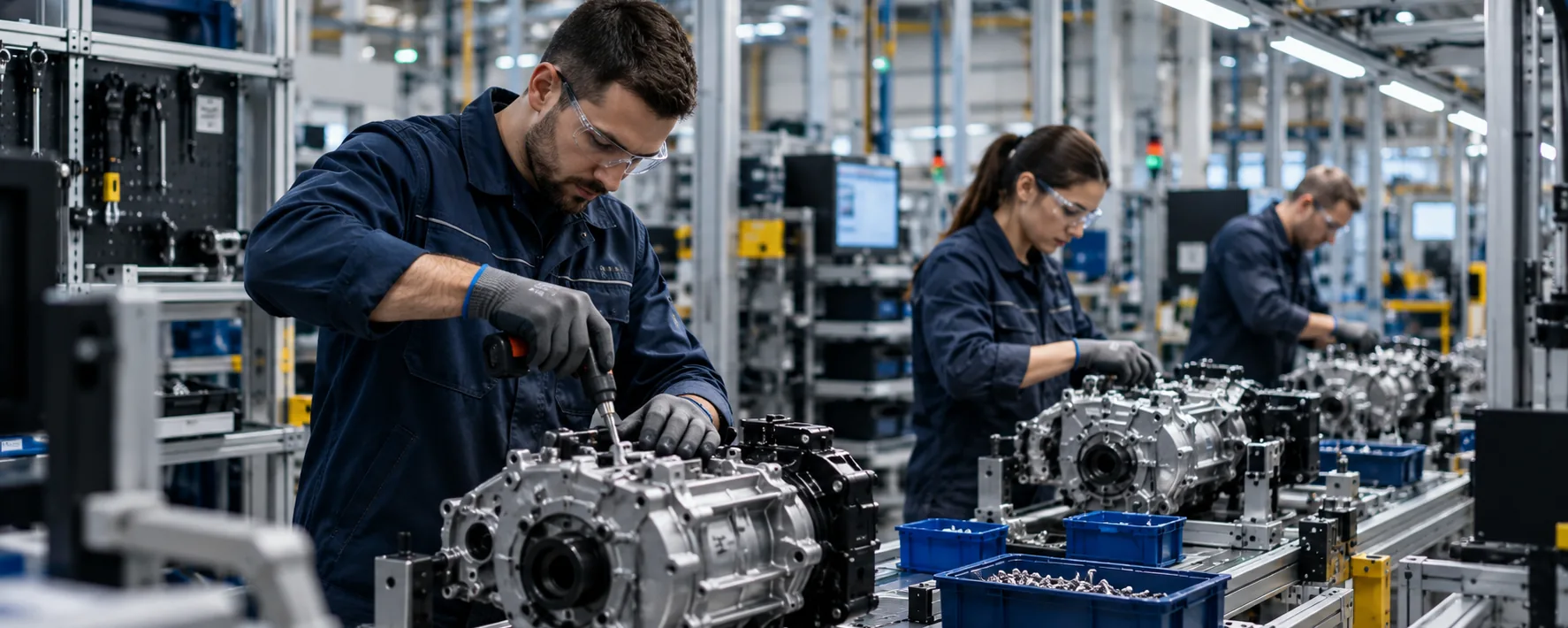
Operator at a bench following printed work instructions

Manufacturers put real effort into work instructions. Engineers write them, quality reviews them, and they get printed and posted at the station. Then the build happens, and nothing records whether any of it went the way the document says. Not because operators are careless, but because no one can stand at every station on every shift. The evidence gets reconstructed later from travelers, paperwork filled in at the end of a run, and somebody’s memory of a unit they finished three weeks ago. That gap costs a manufacturer in three directions at once. Quality, because a missed step is invisible until it reaches inspection or a customer. Speed, because no one can say which step drifts or on which shift. And risk, because the actions that ruin a part were never written down as steps in the first place.

Why now

Computer vision is manufacturing’s next step

You’ve already watched language models change what a company can do with its documents. The same shift is now reaching physical work. Vision models have moved past recognizing objects in a picture. They understand human motion as a process: what an action is, which step in a procedure it belongs to, and whether it matched what the procedure asked for. That’s a different capability from a camera that spots a defect on a part, and it’s the one manual manufacturing has been waiting for.

Machines have been instrumented for decades. The people building your most valuable products have not, because nothing could watch that work and understand it. Now something can. Manufacturing is where it pays off first, because the work is repetitive enough to learn, valuable enough to matter, and invisible enough that nothing else has been able to see it.

Operators in safety glasses assembling gearbox housings along a production line
How we work

What you can expect from us

We say what the camera can’t see

We calibrate against your floor, not our demo

The operator is told first

We start at one station

We say what the camera can’t see

Torque values live in the tool. What’s inside a closed housing is invisible to a camera and to a supervisor standing next to it. If a rule you want depends on something we can’t resolve at your station, you’ll hear that during calibration rather than after go-live.

We calibrate against your floor, not our demo

The first two weeks compare what the camera sees with your work instructions, resolving differences with your team. Most deployments reveal outdated steps no one performs and operator steps the document never captured.

The operator is told first

Every alert reaches the station before it reaches a supervisor. A system that reports upward before it reports to the person who can fix it doesn’t survive contact with a floor, and it shouldn’t.

We start at one station

Not because we think small, but because you shouldn’t instrument a plant on a vendor’s promise. Two weeks in, you have data on your own parts and you can decide what happens next.

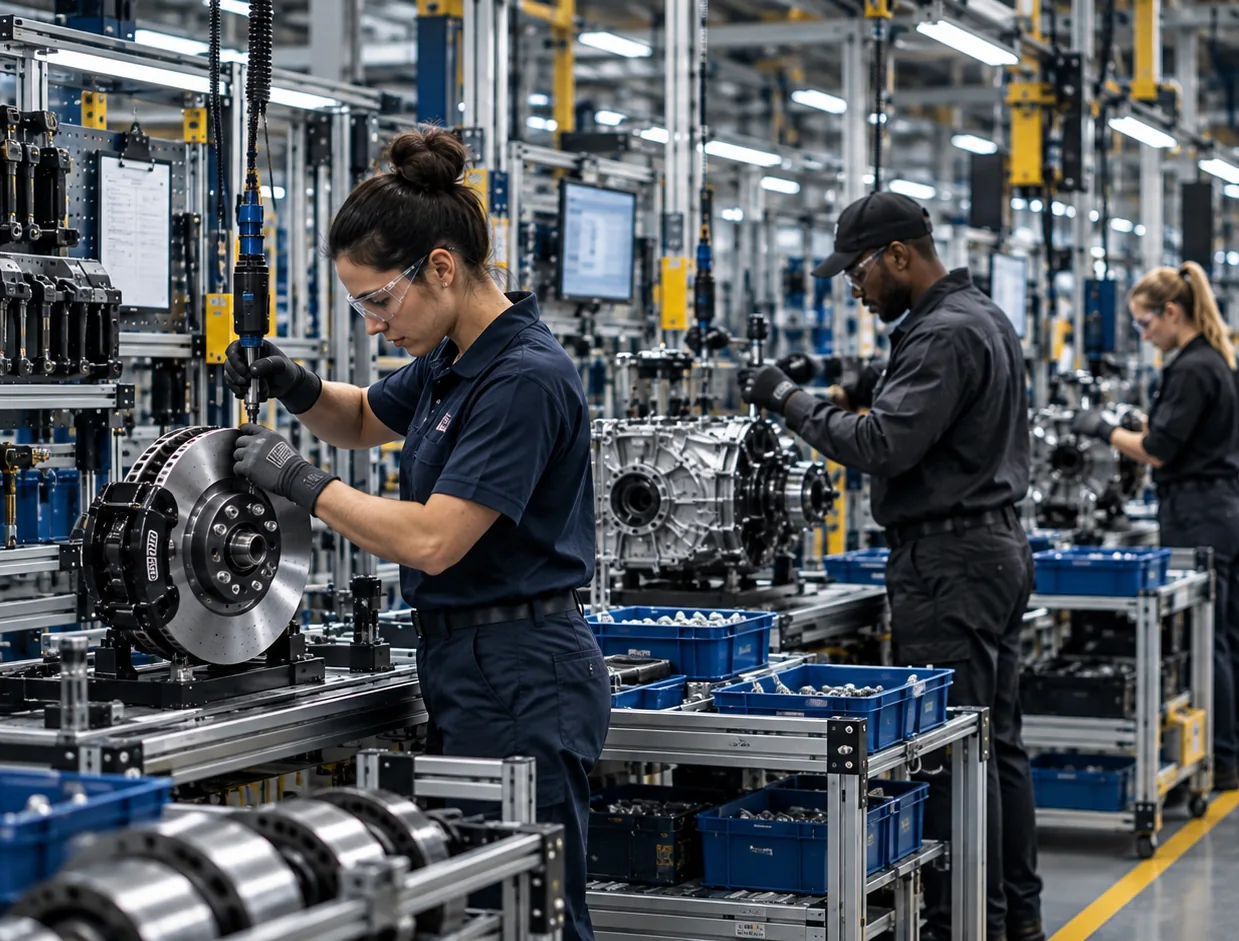
Operator fitting a brake caliper at an assembly station, more operators working down the line
Where this goes

From one station to the standard everywhere

Operator Vision starts by catching deviations at a single station. What it accumulates is more interesting than what it catches. Once a plant has a record of how work actually happens, the best version of a job stops being folklore held by one experienced operator. It becomes something you can see, measure, and teach. Across a group of plants, the best method anywhere becomes the standard everywhere, backed by footage of somebody actually doing it. That’s the direction we’re building in: capturing how skilled manual work is really performed, and making every station run like the best one.

Come see it on your own floor

Pick a station where errors surface late or where no one can explain the variance. Operator Vision goes live in two weeks and you’ll have data on your own parts inside the month.