
FIRST AT THE STATION
The Station
The alert reaches the station first, while the part is still there and the correction costs only a few seconds. Most alerts end here.
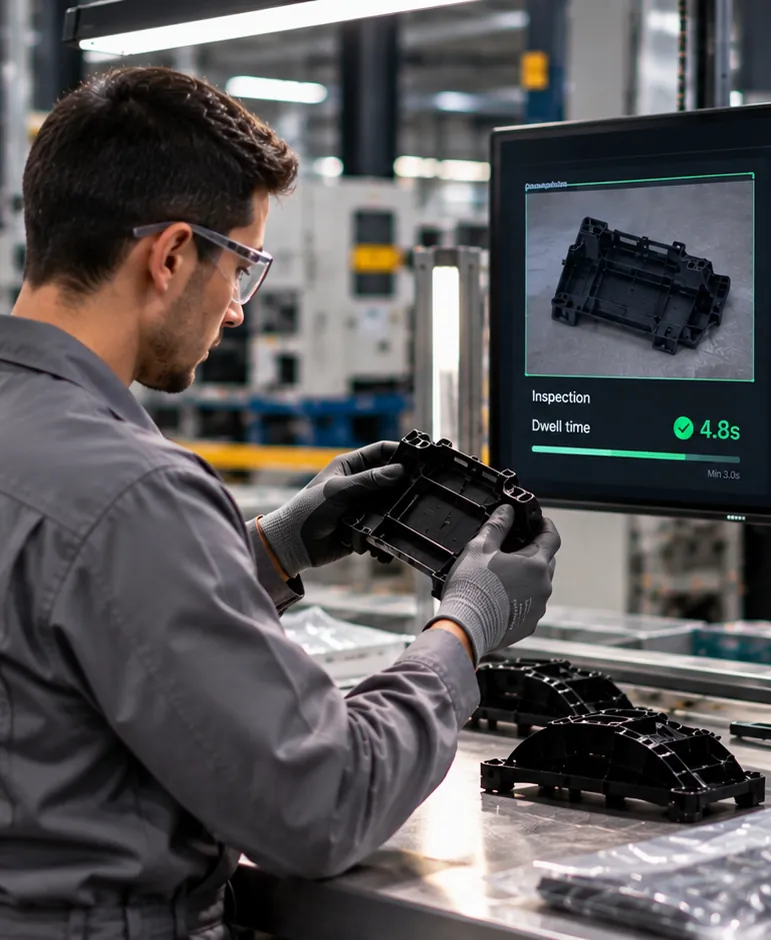
An inspection is the check that stops a defect leaving your plant, and it's also the step that gets rushed when parts arrive faster than one person can clear them. Operator Vision watches every inspection at the station, confirms it took long enough to have happened, and counts what passed and what didn't. The operator is alerted while the part is still there.
Live in two weeks. No MES integration required. Your work instructions are the only input Operator Vision needs.
A bench, a part arriving, a set of checks, and a decision. Sometimes both sides of the part, sometimes a gauge, sometimes a visual against a reference. Then the part goes into a bag, a tray, a carton, or onto a pallet with a label and a count.
It's the last station before the unit belongs to your customer, and it's usually the one with the least data on it. Rejects go into a bin at the side of the bench and get counted at the end of a shift, if anyone counts them. The inspection itself leaves no trace at all beyond a part moving on.
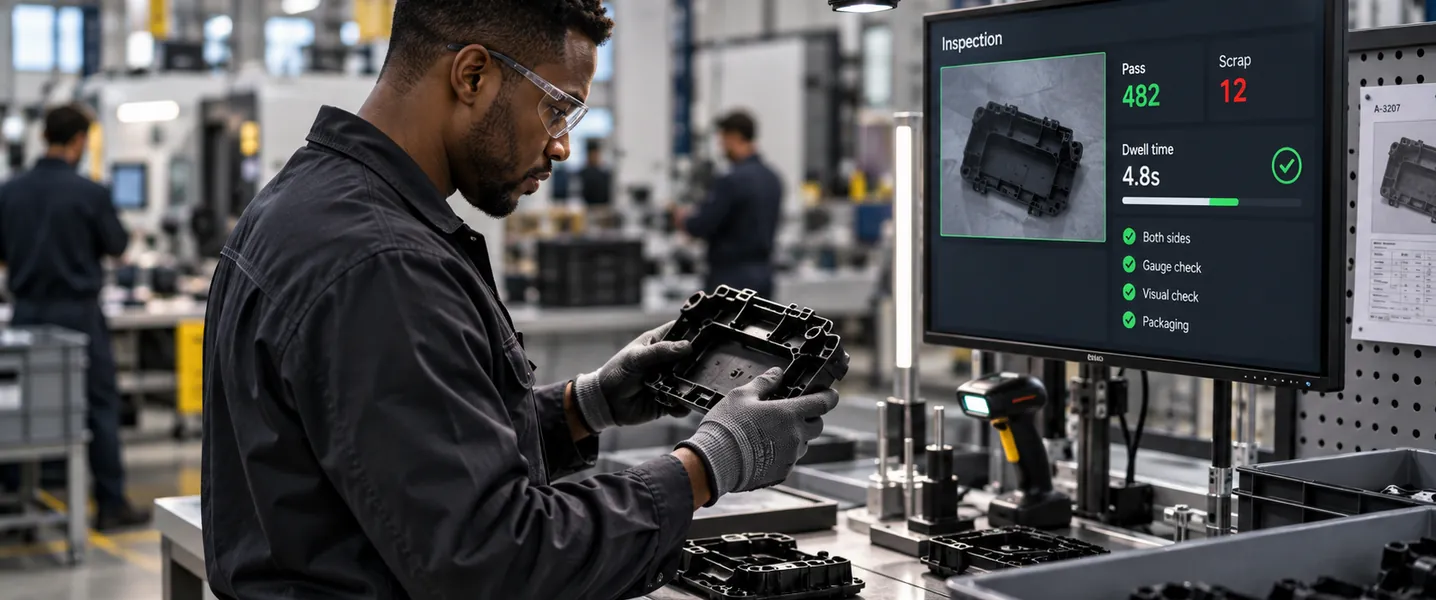
Inspection is repetitive by design, which is exactly what makes it fragile. When work backs up the operator has to keep pace with it, so the check that should take five seconds takes one and the part moves anyway. Nothing in your record distinguishes the two. There's a version of this that's structural rather than human. In plants where inspectors also carry their own production work, they inspect between their own tasks, which means the inspection competes with the job they're being measured on. The double inspection everyone relies on turns out not to guarantee that defects get found. Packaging carries a different failure. A count that's one short, a label on the wrong carton, or a skipped packaging step doesn't damage the part at all. It becomes a customer complaint, a billing discrepancy, and hours of administrative cleanup that no one budgeted for.

50–70%
of scrap at high-mix, low-volume manufacturers traces back to how the work was performed, rather than to suppliers or design
15–30%
of throughput lost when operators drift from the standard
Half
the time your continuous improvement engineers spend on manual time studies, given back. That's the target Assembler AI builds to
Nothing moved forward unchecked
The biggest failure at this bench is the part that never got looked at. A unit reaching packaging without its inspection is caught here rather than at your customer.
Dwell time against a threshold
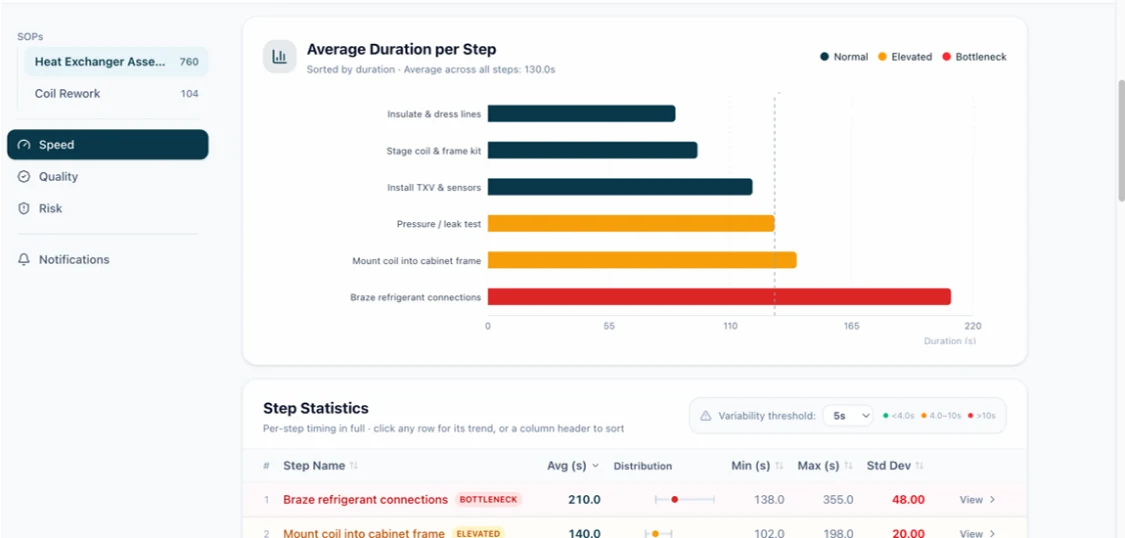
You set the minimum and maximum for a check. An inspection under two seconds gets flagged as one that couldn't have happened, and one running well over gets flagged too, because that's usually a part somebody is unsure about.
Both sides of the part
Where the check requires the part turned over, Operator Vision confirms it was.
The gauge was actually used
Not that the reading passed, which lives in the gauge, but that the operator picked it up and applied it at the right point rather than skipping it when the queue backs up.
The count
How many units went into the carton, the tray, or onto the pallet, checked against what that order calls for.
The right container and the right label
Correct box for the variant, correct label on the carton, and a finished unit that doesn't end up in the wrong tray.
The sequence
Bag, label, box, in the order your work instructions define, with nothing skipped because the line is moving.
Scrap and pass counts, automatically
Rejects going into the bin get counted as they happen, so the number at the end of the shift is a record rather than an estimate.
Every step timed, every cycle
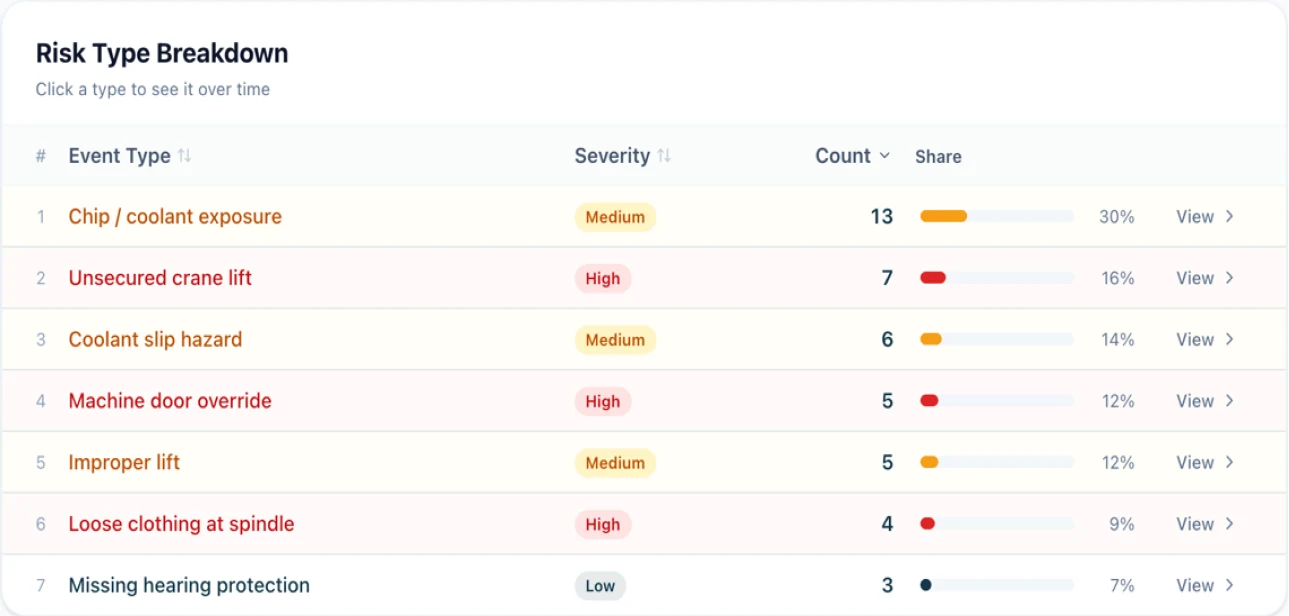
Including time per pallet or per container where that's how your standard is set, with an alert when a pallet runs well over its standard time and is worth re-inspecting.
The list you write yourself
A defective part in the good bin, which is the one that reaches your customer. A part set aside and picked back up minutes later. Work stacking up faster than it clears, which is usually what causes the rushed check in the first place.
FIRST AT THE STATION
The Station
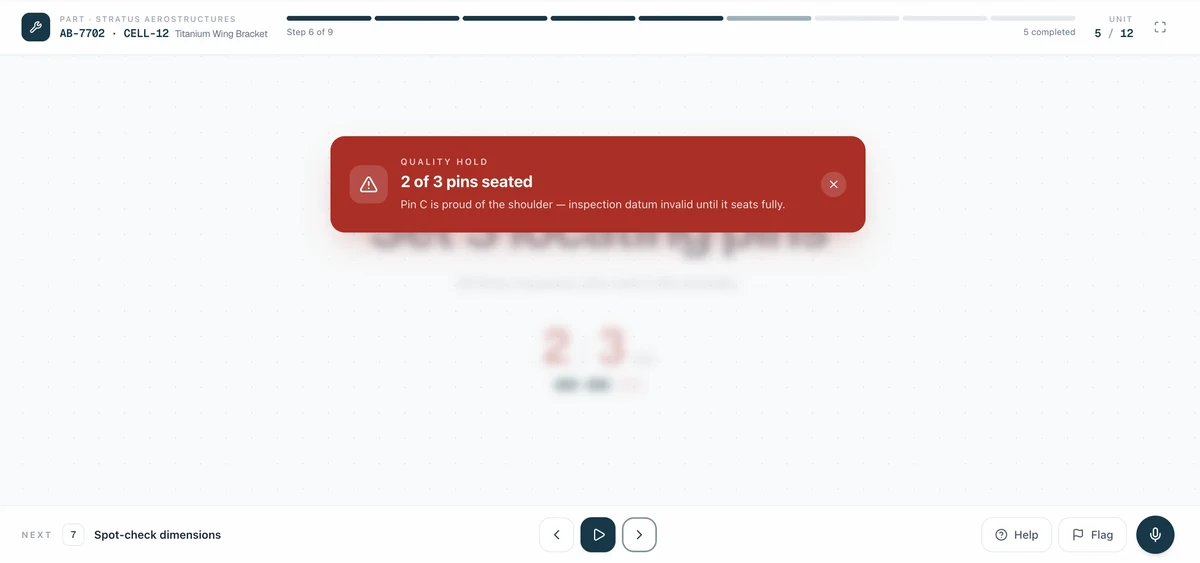
The alert reaches the station first, while the part is still there and the correction costs only a few seconds. Most alerts end here.
IF UNHANDLED
The supervisor
If it isn’t handled at the bench, the alert escalates to a supervisor with the video attached, in time to hold the carton rather than chase it.
ALWAYS
The dashboard
Either way, the event lands on the dashboard. One alert may be noise, but the same alert forty times on second shift is a finding.
The test is simple. If a supervisor standing next to the operator could see it, Operator Vision can see it.
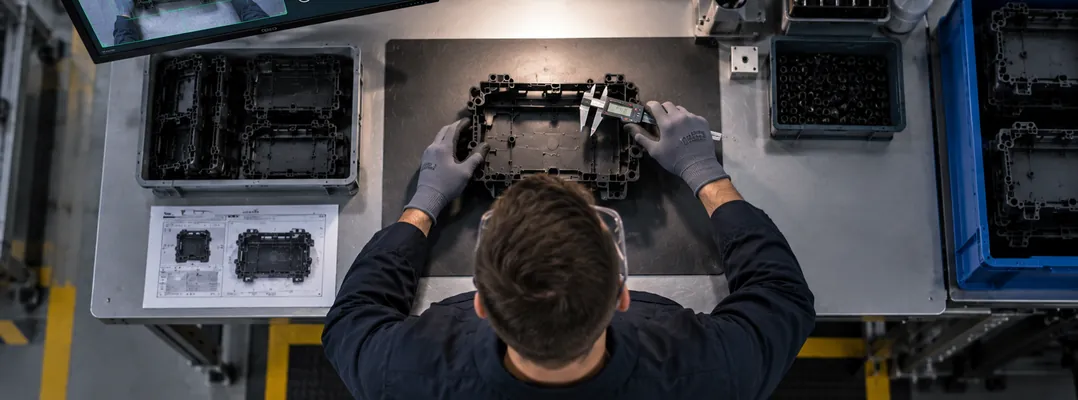
The action, the dwell, the part turned over, the gauge picked up and applied. All of it visible from above and all of it currently unrecorded.
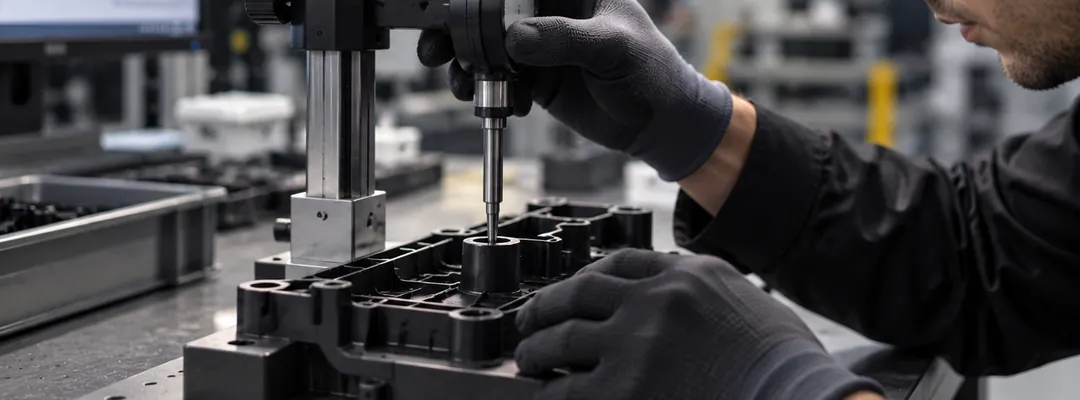
Whether a measurement passed lives in the gauge. Operator Vision confirms the gauge was used at the right point in the sequence, which is the part that gets skipped.
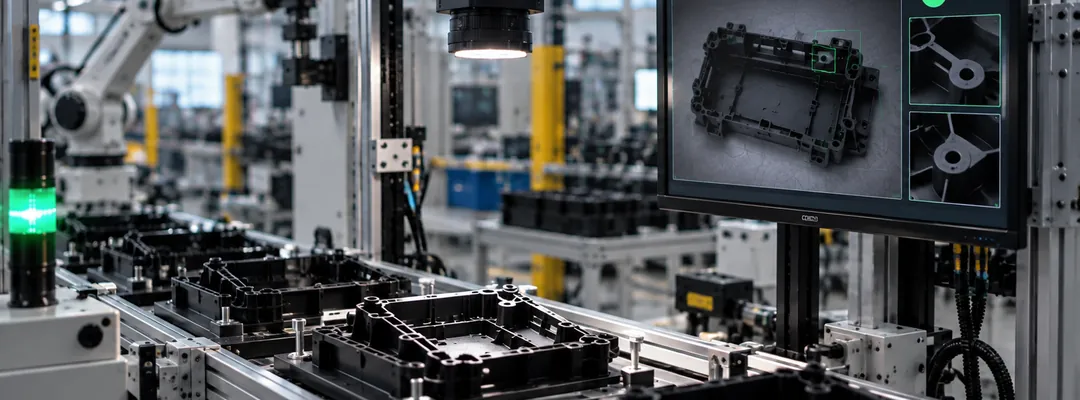
This isn't part-level vision inspection and it doesn't replace one. It confirms the human check happened as your work instructions define it.
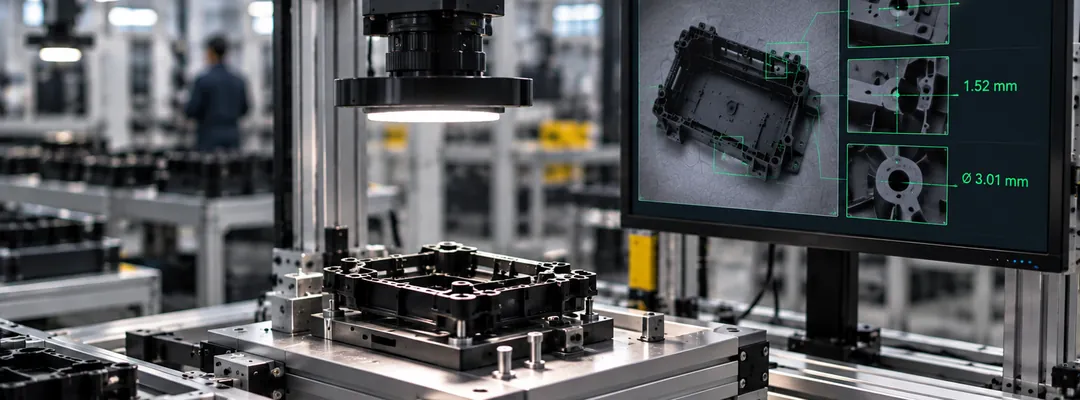
Very small parts and fine markings depend on camera position, and Assembler AI confirms what's resolvable during calibration rather than after go-live.
A continuous read on all three at that bench, running whether or not anyone is scheduled to look.
Average, minimum, and maximum, by shift and by part, with video on every outlier.
Counted as they happen and tied to the step and the shift that produced them, instead of tallied at the end from a bin.
A short count or a wrong label becomes a video of the carton being packed rather than an argument.
Why inspection times dropped on second shift. Why one bench runs consistently faster than the one beside it doing the same check.
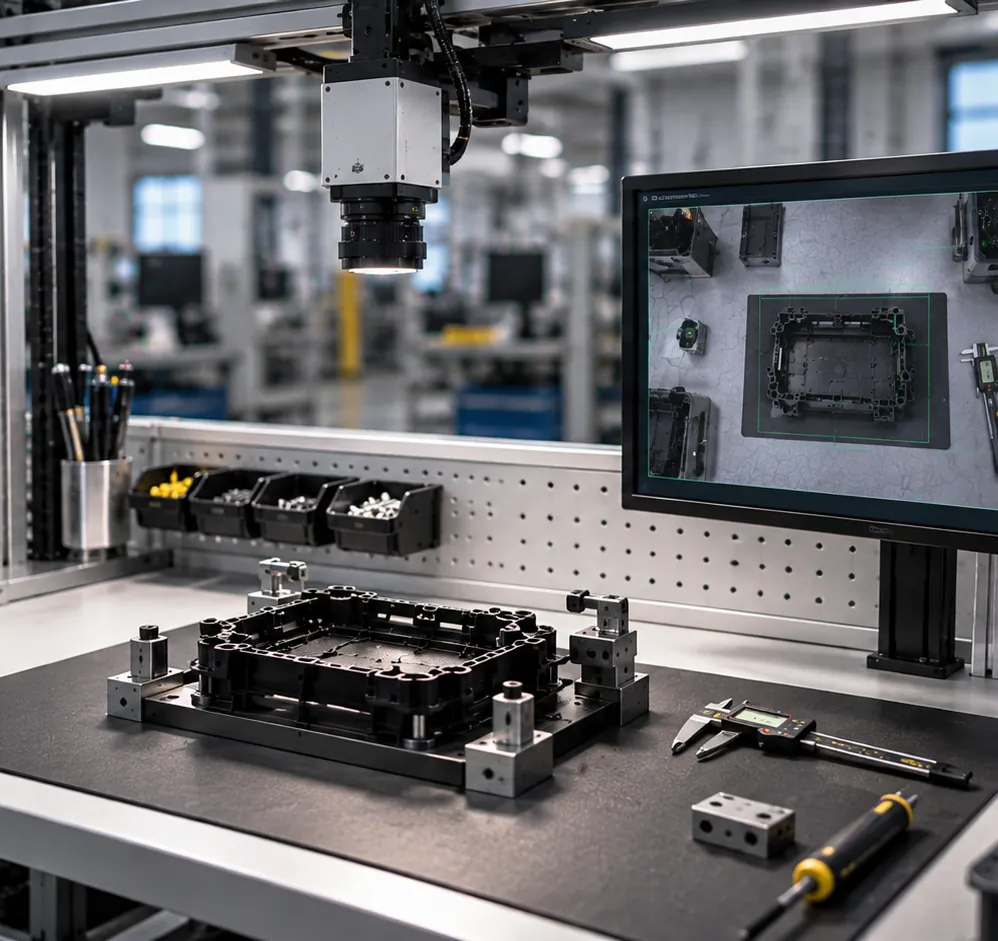
One camera mounted above the bench, off-the-shelf and NDAA-compliant, supplied and provisioned by Assembler AI. It sits on its own subnet and streams out over an encrypted VPN, so your IT team opens one outbound path and nothing else. Nothing about the bench changes and nothing gets attached to your gauges.
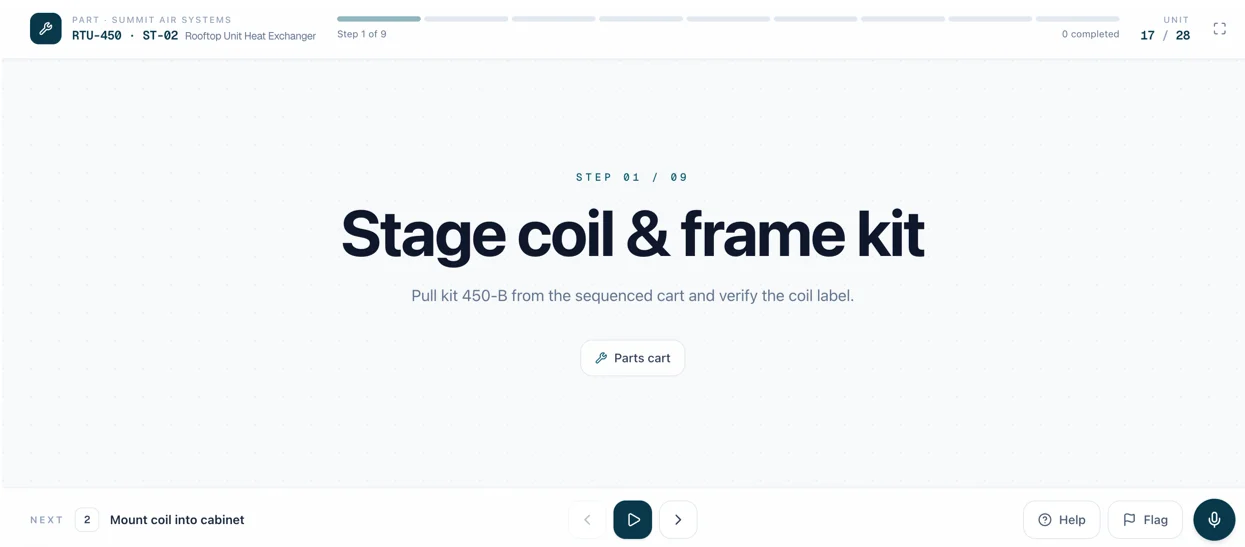
Send the work instructions you already have on day one, and if this station has none written down, Assembler AI will work with you to create them. Week one the camera goes up. Week two is calibration and training the model on your alerts, which on an inspection bench means agreeing the dwell thresholds with your team before anything fires.
That's two weeks on a bench with one operator, closer to three where several people share it. Benches after the first go up in parallel.
No one instruments a plant on a vendor's promise. So you start small, with the bench where escapes are most expensive or the counts are most often wrong. Two weeks later you know how often checks are being short-changed, on your own parts, with video.
What happens after is worth understanding before you begin. This data is comparative, so every station you add makes the ones you already have more useful.
How often the check actually happens as written, and what it costs when it doesn't.
Inspection benches running the same check become directly comparable, and you find out whether a rushed check is one person's habit or what the line does to everyone on it.
Shifts and cells compare against each other. Scrap counts stop being a monthly number and become something you can trace to a station and a step.
The same inspection in two plants becomes comparable for the first time, with video from both.
If you're heading toward multiple sites, tell Assembler AI early and we'll scope single sign-on, role-based permissions, and per-site data separation with your IT and HR teams while the first station runs.
No. It confirms the inspection your people perform actually happened as written, and it counts what they find. What it removes is the clipboard and the end-of-shift tally, not the judgment.
No, and they solve different problems. Part-level vision inspection looks at the part and tells you a defect exists. Operator Vision looks at the station and tells you whether the check was performed.
That’s common and it’s one of the reasons checks get compressed. Operator Vision times the inspection itself, so you can see what happens to dwell when the same person is carrying a production target as well.
You tell us during calibration, and we tune from there. Thresholds are set per step, so a two-second visual check and a thirty-second gauge check each get their own band.
Yes, where rejects go into a defined bin or container at the station. That’s a common setup and it’s one of the first things customers ask for.
Both work. Where your cycle is measured per container, times are tracked that way, and a pallet running well over standard can raise an alert worth re-inspecting.
If the steps stay the same, a new part shape is usually fine. If the check changes, you upload the new work instructions and Operator Vision is retrained against them.
No. Faces are blurred and no names or IDs are collected. Variance shows up tied to a station and a shift.
One camera, two weeks, and you'll know how many of your inspections are actually happening.
No MES integration required, and it scales easily across your sites.
Stay updated with the latest news, ideas, and product updates.