
FIRST AT THE STATION
The Station
The alert reaches the station first, while the part is still there and the correction costs only a few seconds. Most alerts end here.
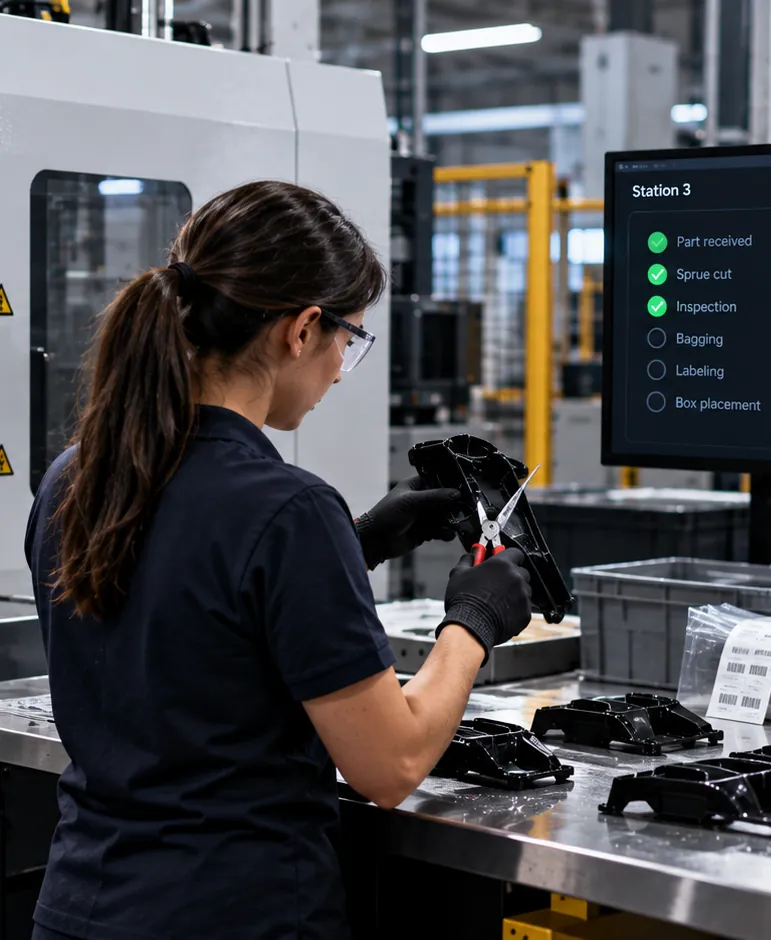
The machine is the most instrumented thing in the cell. The work that happens after the part comes out, cutting the sprue, inspecting it, bagging, labelling, and putting it in its box, has no record at all. Operator Vision checks each of those on every cycle and alerts the operator while the part is still in front of them.
Live in two weeks. No MES integration required. Your work instructions are the only input Operator Vision needs.
A molding machine, injection or blow, often with a robot behind it dropping parts onto a conveyor or a table, and an operator receiving them. The operator cuts the sprue, inspects the part, bags it, adds a label, and puts it in a specific box. Then the next one.
A plant might run fifteen or twenty cells doing exactly that, each one on a different part. Cycle after cycle, shift after shift, at a pace the machine sets rather than the operator.
Everything about the shot is measured. Everything the person does afterward is not.
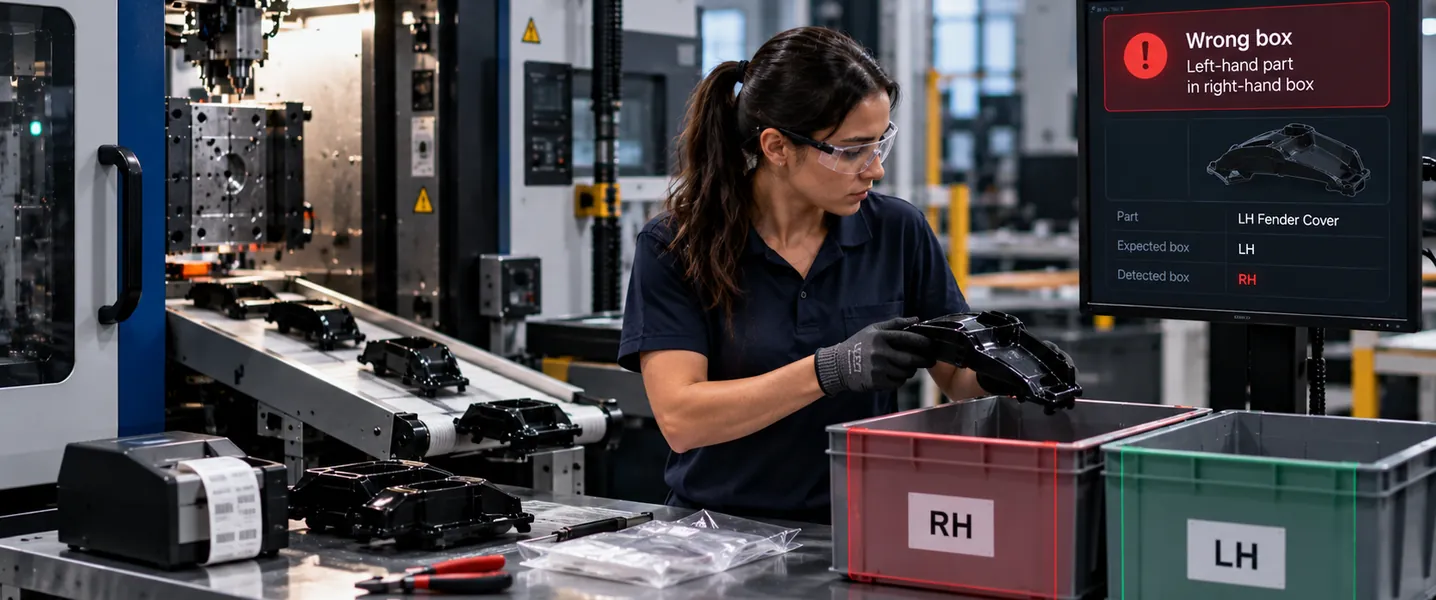
The first is a bad part that never gets rejected. When the machine produces a defect, the operator is the one who has to catch it at the manual inspection, and that inspection runs at the pace the machine sets. Compress it and the part goes into the box instead of the reject bin, which means a production issue reaches your customer as a quality complaint. The second is a good part that ends up in the wrong place. The signature version is mirror parts. A left-hand fender in a right-hand box, a door molding in the wrong carton. The part is correct in every respect, so nothing downstream stops it, and the boxes sit next to each other at a bench where the operator is working to a machine's pace. Both compound with volume. Even at a very low error rate, a cell running thousands of cycles a week gets one of these wrong eventually, and in automotive your customer catches all of them.
50–70%
of scrap at high-mix, low-volume manufacturers traces back to how the work was performed, rather than to suppliers or design
15–30%
of throughput lost when operators drift from the standard
Half
the time your continuous improvement engineers spend on manual time studies, given back. That's the target Assembler AI builds to.
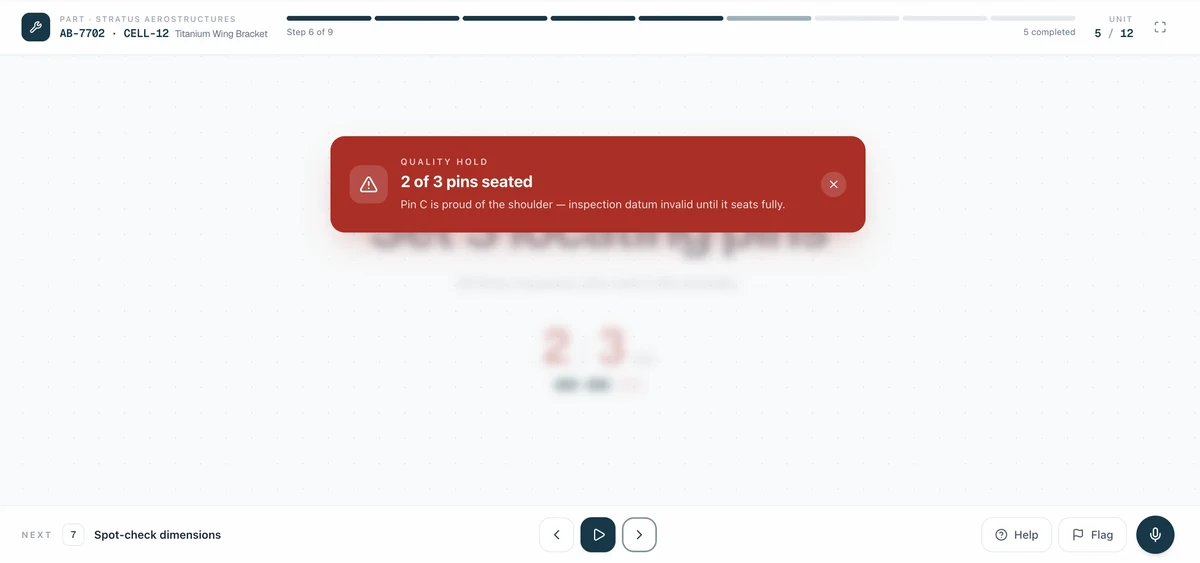
The sprue was cut, and cut properly
Confirmed on every part rather than assumed because the operator is experienced.
The inspection happened, and took long enough to count
With a minimum dwell time, so a check compressed by an arriving part doesn't get recorded as a check. This is the step that catches a defect the machine produced.
Bag, label, box, in the right order
Skipped packaging steps and labels on the wrong bag get caught at the cell.
The right box
Left against right, variant against variant, and the correct container for the part actually in the operator's hand. This is the check that keeps mirror parts from reaching your customer.
The count
How many went in the box, checked against what that box should hold.
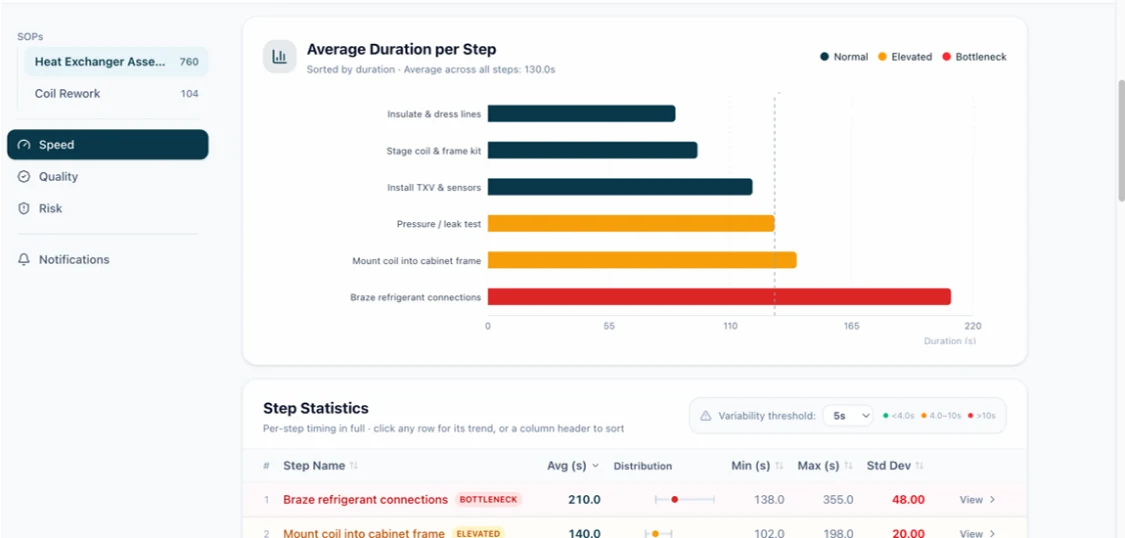
Every step timed, every cycle
Average, minimum, and maximum per step, with video on every outlier. On a cell where the machine sets the pace, this is where you see whether the operator is keeping up with it or quietly falling behind.
Accumulation
Parts arriving faster than they clear, which is the condition that produces the rushed inspection two steps later.
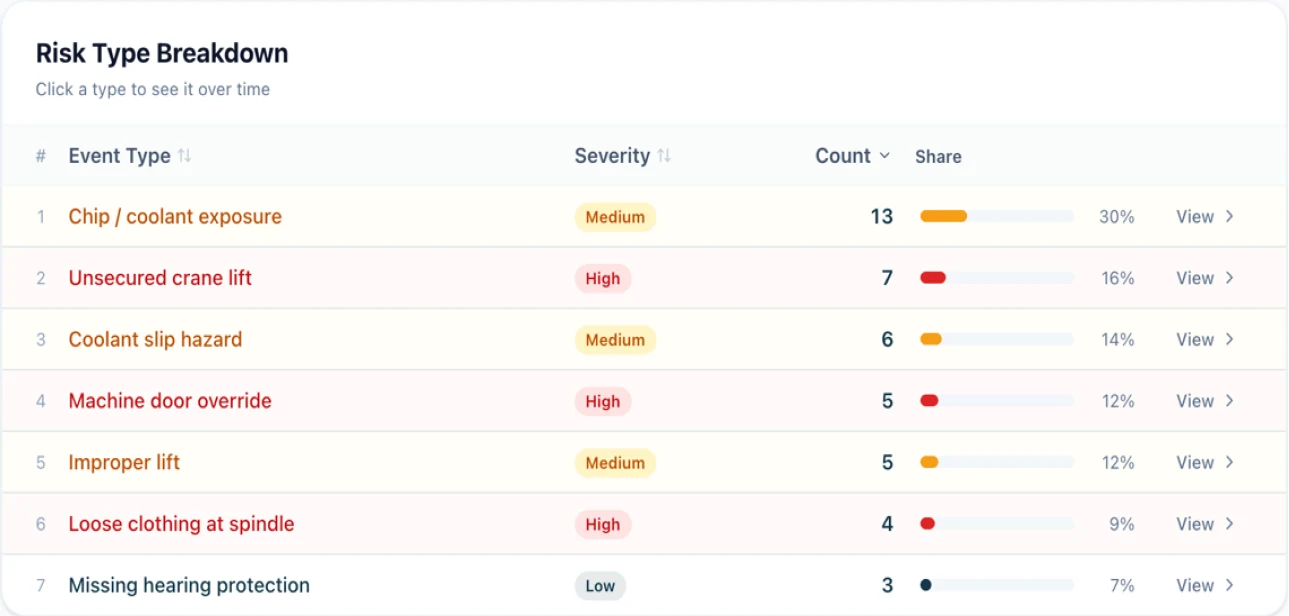
The actions that never appear as steps
A part off the floor and back on the line. A defective part in the good bin, which is the one that reaches your customer. A part set aside and picked back up minutes later. Handling on a part that hasn't cooled.
FIRST AT THE STATION
The Station
The alert reaches the station first, while the part is still there and the correction costs only a few seconds. Most alerts end here.
IF UNHANDLED
The supervisor
If it isn’t handled at the cell, the alert escalates to a supervisor with the video attached, in time to hold the box rather than recall it.
ALWAYS
The dashboard
Either way, the event lands on the dashboard. One alert may be noise, but the same alert forty times on second shift is a finding.
The test is simple. If a supervisor standing next to the operator could see it, Operator Vision can see it.
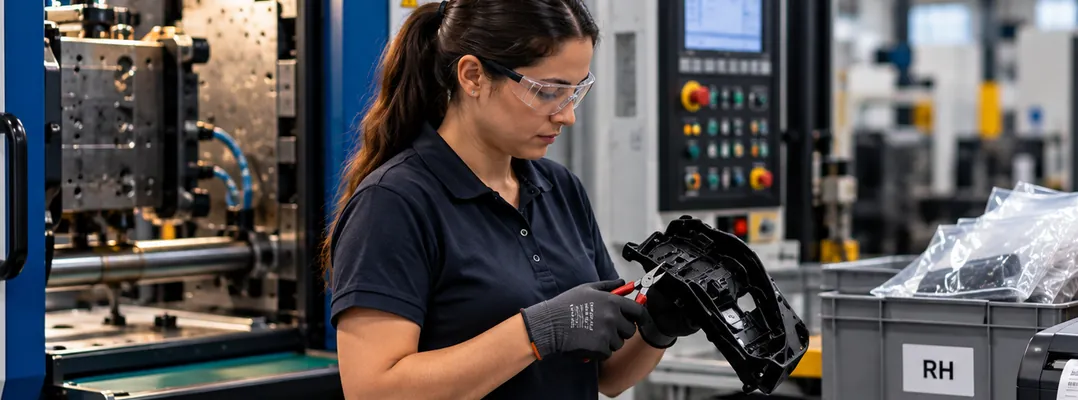
Receiving, cutting, inspecting, bagging, labeling, placing. All of it visible from above and none of it currently recorded.
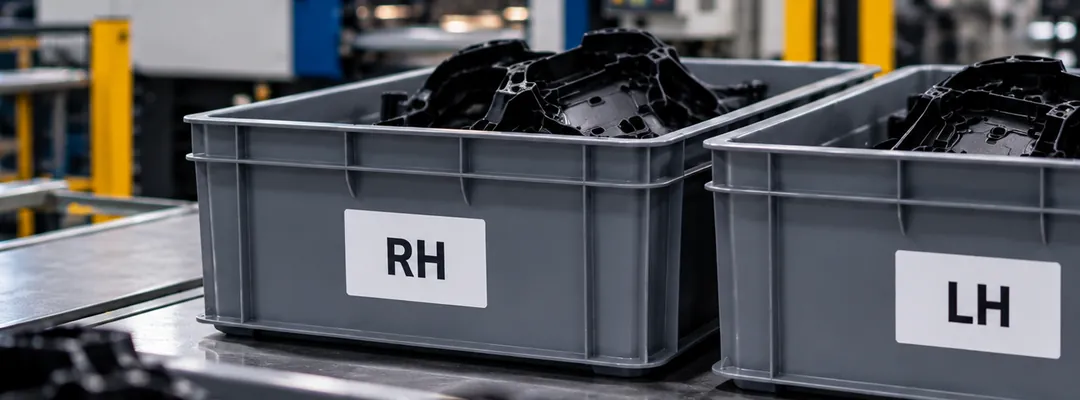
Where variants look visually different, Operator Vision identifies which part is in production and which container it belongs in, and switches automatically as the cell changes over.
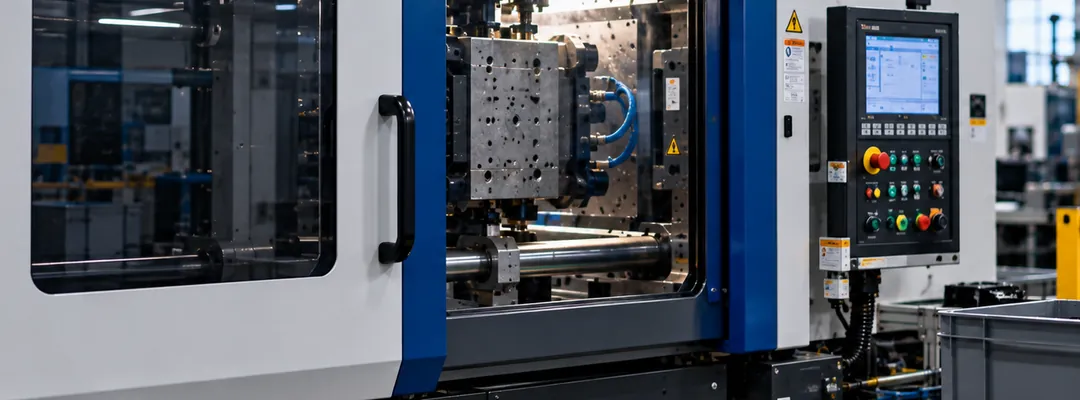
The shot, the barrel temperature, and the cycle timer belong to the machine and its own monitoring. Operator Vision covers the human side of the cell.
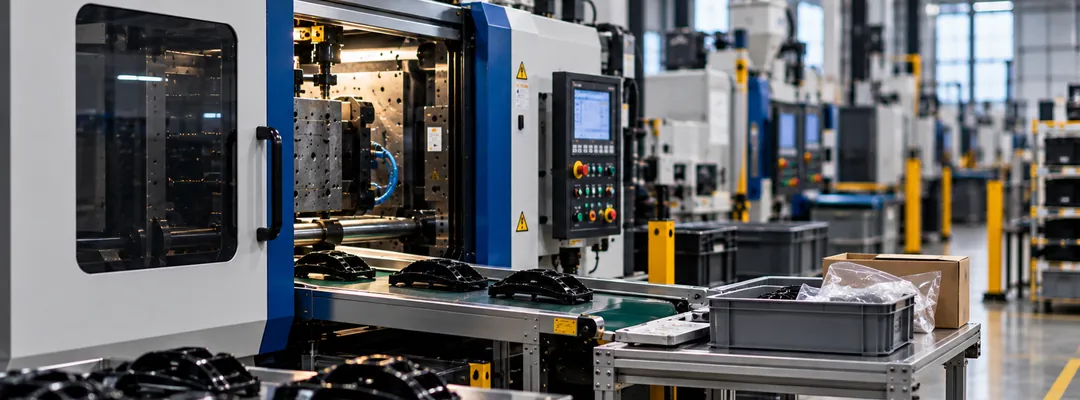
This isn't part-level vision inspection. It confirms the check happened as your work instructions define it.
A continuous read on all three at that cell, running whether or not anyone is scheduled to look
Fifteen cells running similar work become directly comparable for the first time, including which ones fall behind the press and when.
Not an incident that surfaced when a customer called, but a count you can watch move after you change the layout
A wrong part in a box becomes a video of the box being packed.
Why one cell runs slower than the one beside it on the same part. Why inspection times drop in the last hour of a shift.
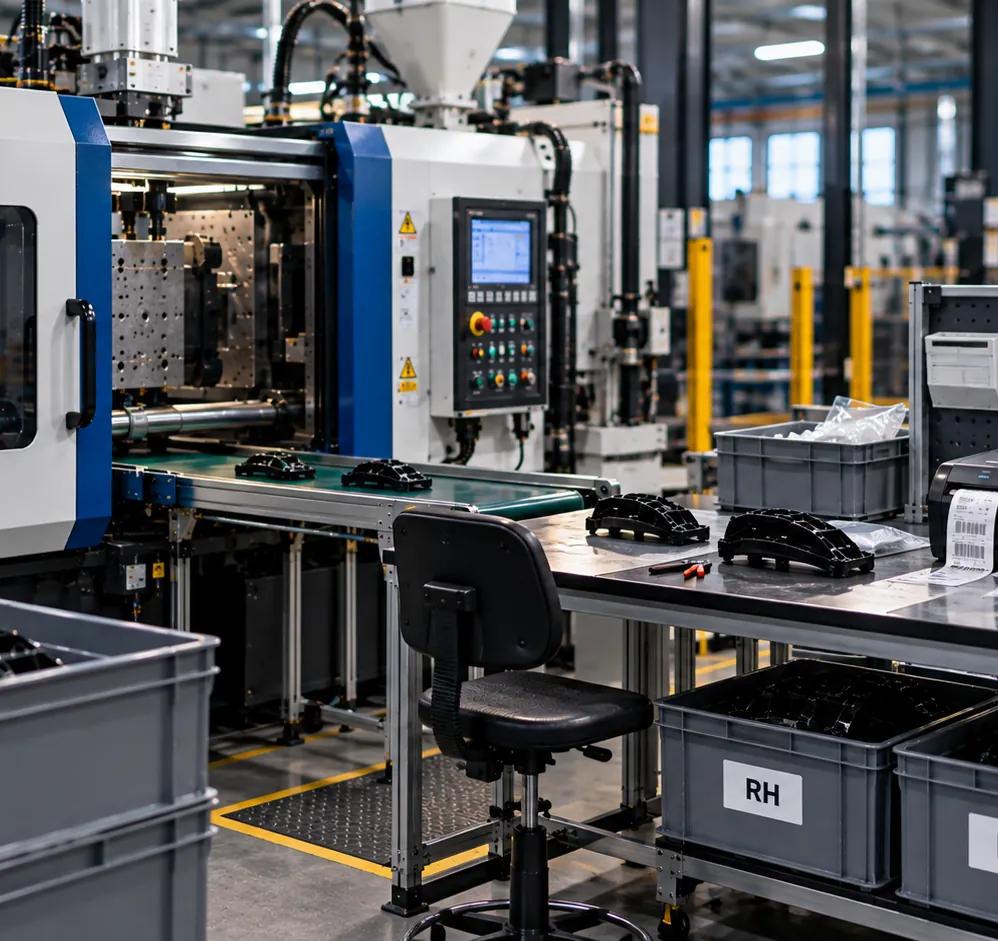
One camera mounted above the operator's working area, off-the-shelf and NDAA-compliant, supplied and provisioned by Assembler AI. It watches the bench rather than the machine, so nothing goes near the press and no PLC integration is required. Where you want machine data alongside it, that's a custom integration we can scope with you. The camera sits on its own subnet and streams out over an encrypted VPN.
Send the work instructions you already have on day one, and if this cell has none written down, Assembler AI will work with you to create them. Week one the camera goes up. Week two is calibration and training the model on your alerts, including teaching it the variants that share a bench.
That's two weeks on a cell with one operator, closer to three where two cells share an operator between them. Cells after the first go up in parallel, so covering a molding floor is measured in weeks.
No one instruments a plant on a vendor's promise. So you start small, with the cell that produces the most mix-ups or the most scrap. Two weeks later you know how often it's happening, on your own parts, with video.
What happens after is worth understanding before you begin. This data is comparative, so every cell you add makes the ones you already have more useful.
How the work actually happens against how it's written, and how often a part ends up in the wrong place.
Fifteen cells running the same workflow on different parts is the ideal case for comparison. You find out which cells keep up with the press, which don't, and whether the difference is the part, the layout, or the shift.
Shifts and cells compare against each other, and a layout change gets measured against how that cell ran before it.
The same part molded in two plants becomes comparable for the first time, with video from both.
If you're heading toward multiple sites, tell Assembler AI early and we'll scope single sign-on, role-based permissions, and per-site data separation with your IT and HR teams while the first station runs.
Not by default. Operator Vision watches the operator's working area rather than the machine, so no PLC integration is required and nothing physical goes near the press. Where you want machine data alongside what the camera sees, that's a custom integration Assembler AI can scope with you.
That’s the case this station page is written around, and it’s the check most molding customers want first. Variants that look visually different are identified automatically. Near-identical left and right versions get taught during calibration.
Common, and it works. Tell Assembler AI at the walkthrough, because a station where the operator moves between two benches may need two cameras, and that’s a sizing decision we’d rather make up front.
No. Operator Vision is looking at what the operator does with the part after it arrives, and a robot placing parts is just how the part gets there.
It confirms the trim step was performed and that the part was inspected afterward. Whether a specific edge passes is a part-level inspection question, and Operator Vision sits alongside that rather than replacing it.
If the steps stay the same, a new part shape is usually fine. If the steps change, a new mold that adds a trim operation for instance, you upload the new work instructions and Operator Vision is retrained against them.
Short cycles are normal here and the timing runs on every one of them. Tell us your cycle time at the walkthrough and we’ll confirm against your specific part.
No. Faces are blurred and no names or IDs are collected. Events come back tied to a cell and a shift.
One camera, two weeks, and you'll know how often a part is going into the wrong box.
No MES integration required, and it scales easily across your sites.
Stay updated with the latest news, ideas, and product updates.